
Introduction
Search engine optimization, commonly known as SEO, is one of the most effective digital marketing strategies for improving website visibility and attracting organic traffic. After working on multiple WordPress business websites and SEO projects, one common pattern becomes clear: websites that focus on user experience and helpful content consistently perform better in search rankings.
In this guide, you’ll learn:
- what SEO is,
- how SEO works,
- why SEO matters for businesses,
- and practical strategies to improve rankings in 2026.
This article is especially useful for beginners, small businesses, bloggers, and WordPress website owners.
What Is SEO?
SEO stands for Search Engine Optimization.
It is the process of improving a website so search engines like Google can better understand, index, and rank its pages.
The goal of SEO is to increase:
Why SEO Is Important
Increases Organic Traffic
When your website ranks higher in search results, more users can discover your business.
For example:
- local services,
- ecommerce stores,
- blogs,
- agencies,
- consultants,
- SaaS companies.
SEO helps attract users actively searching for related services or information.
Builds Long-Term Website Authority
High-quality SEO content can continue generating traffic for months or years.
Unlike paid ads, organic traffic does not stop immediately when marketing budgets end.
Improves User Experience
Modern SEO is not only about keywords. It also focuses on:
- page speed,
- mobile responsiveness,
- content quality,
- navigation,
- user satisfaction.
How Search Engines Work
Search engines generally follow three steps:
Crawling
Search bots discover website pages.
Indexing
Content is stored and organized in search engine databases.
Ranking
Algorithms determine which pages best match user search intent.
SEO helps improve visibility during this process.
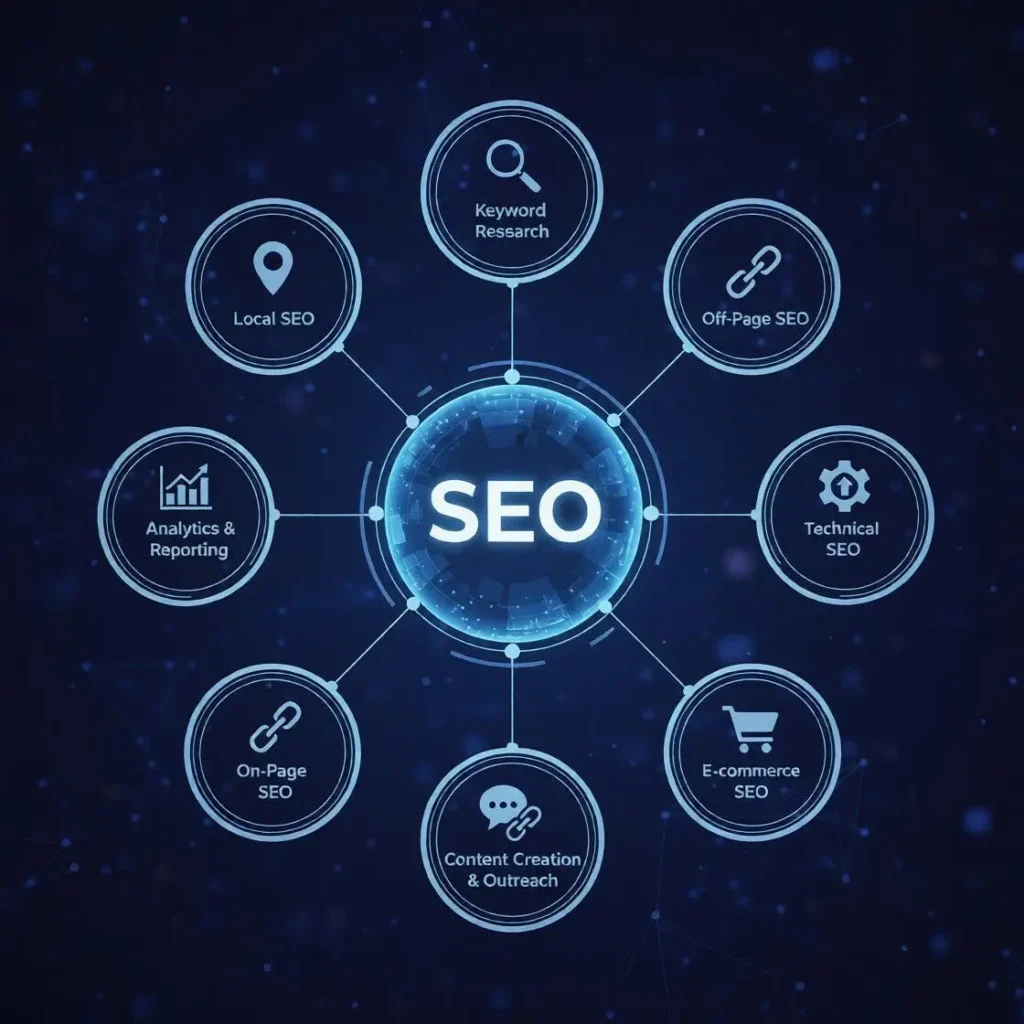
Main Types of SEO
1. On-Page SEO
On-page SEO focuses on optimizing content and page structure.
Important elements include:
- title tags,
- headings,
- keyword usage,
- internal linking,
- image optimization,
- meta descriptions.
2. Technical SEO
Technical SEO improves website performance and accessibility.
Examples:
- faster loading speed,
- mobile optimization,
- XML sitemaps,
- HTTPS security,
- schema markup.
Useful tools:
- Google Search Console
- Google PageSpeed Insights
3. Off-Page SEO
Off-page SEO focuses on building authority through:
- backlinks,
- brand mentions,
- online reputation,
- digital PR.
SEO and E-E-A-T
Google evaluates content quality using E-E-A-T principles:
- Experience
- Expertise
- Authoritativeness
- Trustworthiness
Websites that demonstrate real expertise and helpful information often perform better long term.
Example of strong E-E-A-T:
- original tutorials,
- case studies,
- testing results,
- expert insights,
- transparent recommendations.
SEO Tips for WordPress Websites
Use an SEO Plugin
Popular options:
- Rank Math
- Yoast SEO
These help optimize:
- metadata,
- sitemaps,
- schema,
- indexing settings.
Improve Website Speed
Fast-loading websites improve both SEO and user experience.
Optimization methods:
- caching,
- image compression,
- CDN usage,
- lightweight themes.
Recommended performance tools:
- GTmetrix
- Cloudflare
Best SEO Practices in 2026
Focus on:
- helpful content,
- E-E-A-T,
- technical optimization,
- user experience,
- mobile performance,
- trustworthy information.
Modern SEO is about helping users first and optimizing for search engines second.
Final Thoughts
SEO remains one of the most valuable long-term strategies for growing online visibility. By combining:
- quality content,
- strong technical setup,
- WordPress optimization,
- and E-E-A-T principles,
businesses can improve rankings and build lasting authority online.
Instead of focusing only on keywords, successful SEO today prioritizes solving real user problems with useful, trustworthy content.
Conclusion
Building a successful online presence today requires more than just a visually attractive website. Businesses need a fast, secure, SEO-friendly platform that delivers a strong user experience and helps customers find their services online.
As a professional web developer and SEO specialist, combining modern website development with effective search engine optimization strategies can significantly improve website performance, visibility, and long-term growth. From WordPress setup and technical SEO to content optimization and website speed improvements, every element plays an important role in achieving better search rankings and user engagement.
By focusing on helpful content, E-E-A-T principles, mobile optimization, and technical performance, businesses can build stronger authority and attract more organic traffic through Google and other search engines.
Whether you are launching a new business website or improving an existing one, working with an experienced web developer and SEO specialist can help create a website that is both user-friendly and optimized for long-term digital success.